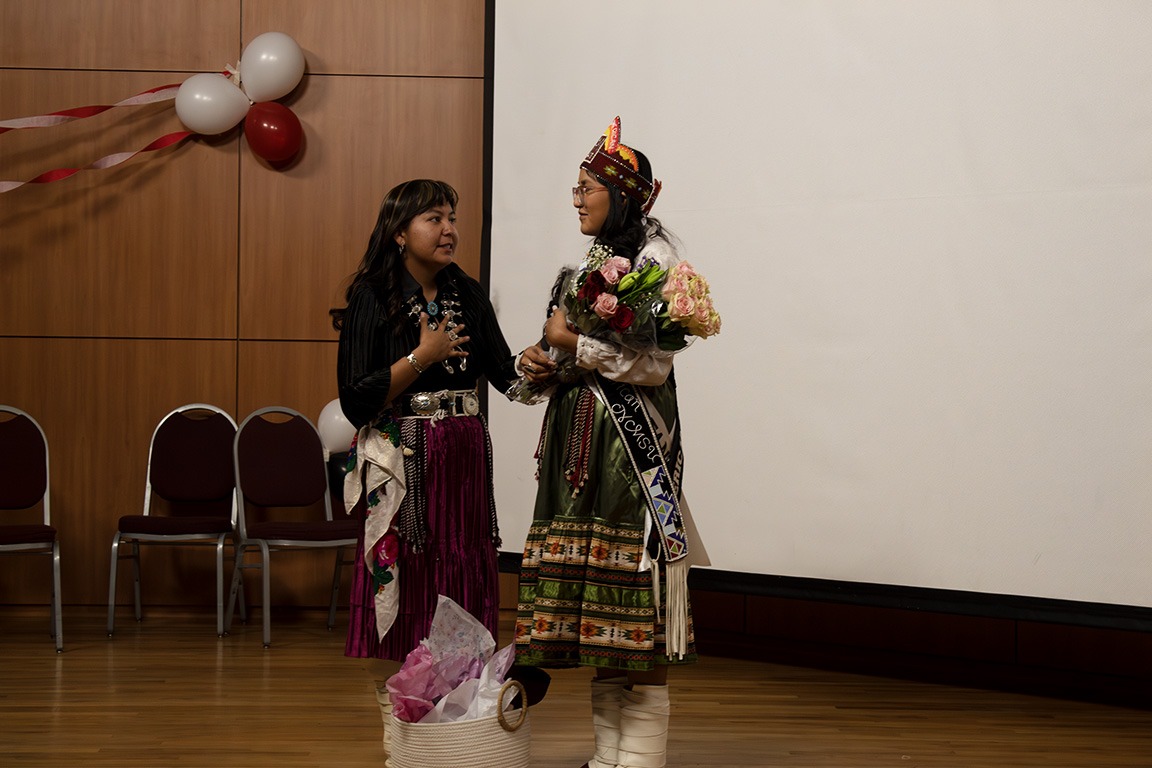
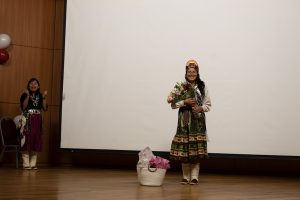
In honor of American Indian Week, the Corbett Center Auditorium was filled with supporters waiting to see the title of Miss Native American NMSU passed down to the one contestant in the running, Kimora Pettigrew.
This moment honored the representation for Indigenous cultures on campus, while also raising questions about future student involvement and the visibility within Native American programs at NMSU.
The annual tradition was held during American Indian Week, on the evening of Friday, March 27. Family and friends were eager to see cultural representation on stage, their anticipation filling the room as they waited for the crown to be passed down by the former Miss Native American, Dylan Carlisle.
American Indian Week is a time that honors the voices and traditions of native communities, especially those on campus. Although being the only competitor due to a low turnout and lack of awareness, Pettigrew remained undeterred, maintaining her preparation for the pageant.
“It’s all about being resilient and putting myself out there,” Pettigrew said. “I think also just wanting to be a role model for everyone.”
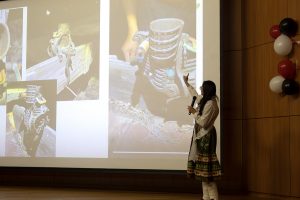
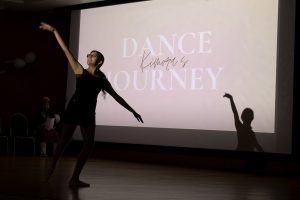
Pettigrew showcased both contemporary and traditional talents in her presentation. Her contemporary talent was a dance demonstration of Variation Five from the ballet “Paquita”. For the traditional portion, she discussed the rewarding and rich history of growing corn traditionally and its importance. She noted that it’s been cultivated by Native Americans for thousands of years.
Throughout her presentation, Pettigrew frequently discussed her desire to connect with her Navajo culture, having grown up in a border town near the reservation. She also highlighted her own role model and inspiration — her Náli, meaning grandmother.
“Now that I’m older, and I see the younger generation, being where I’m at, looking up to me. That just drives me,” Pettigrew said.
While this pageant reflected a deep empowerment for Native Americans’ cultural roots, it also served as a quiet call to action.
Despite a vibrant campus community, there is a growing need for recruitment and engagement efforts to ensure these cultures are being represented.
“It’s important to highlight the different kind of diversity that we have in New Mexico,” Carlisle said.
(Corey Preston)
However, being the only person on stage also serves as a testament to Pettigrew’s dedication. While the numbers fell short this year, her message of keeping Indigenous excellence alive did not.
Keeping these traditions alive is not only significant to the program but also to Native students at NMSU who may feel distant from their traditions and culture.
“When Native students come to NMSU, they sort of feel like a disconnect,” observer Sammie Cadman said. “We always make the effort to come in so I can feel a part of my culture, a part of my home when I’m down here.”
The impacts of programs like these offer a sanctuary for Native American students to celebrate their roots, while also educating the broader campus community about New Mexico’s diverse cultures. This program is a space that aims to provide inclusivity and allows students to share their voices and come in with an open mind of learning cultural appreciation.
“It [American Indian Programs] gives many opportunities for a lot of students to open up more and be proud of where you come from,” attendee Neci Yazzi said.
(Corey Preston)
For Pettigrew, her performance served as a bridge between her heritage and the future of the community at NMSU. The pageant is more than winning a title; it’s an invitation for other students to find their own voices within tradition.
“It’s very important to be grounded and to have that community. That’s why I’m really involved with my culture,” Pettigrew said.
Pettigrew’s message reflected the resilience she held that night, and while she may have been the only one on stage this year, the door remains open for future voices to come.