Read the Spanish translation of this article here.
I am mixed. I hold fragments of both of my cultures. I listen to the music, I cook the food. I can’t speak the language, I don’t know how to do the dances.
I know parts of my culture deeply. Other parts, I only observe from the edges.
What’s interesting is that, in a way, many Americans can relate. America is not mono-ethnic. We live in a country where anyone can be from anywhere, and we’re curious about it.
“What are you? Where are you from?” are common questions, but the extent to how much we know about ourselves varies.
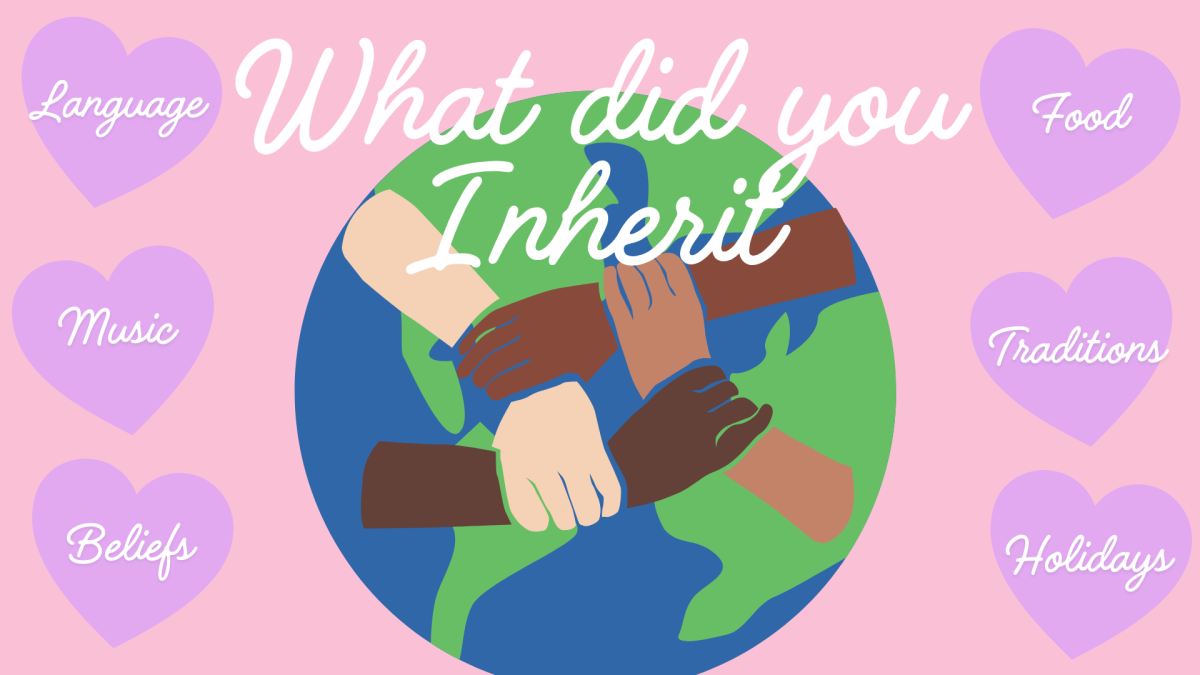
Some of us can trace our family back generations – ancestors from Italy, Colombia, Thailand, etc., all in search of the American dream. Some can take that information and celebrate it, language intact, recipes memorized, holidays practiced without hesitation. Others inherit only pieces. And some inherit little beyond a broad, undefined sense of being “American,” with few ties to a specific ancestral culture at all.
I know that I have ancestors from Hawaii. I know that I have ancestors from Mexico. Being mixed, I’ve felt the outsider feeling that comes with only holding onto fragments, but looking around, the grass isn’t always greener. I can only imagine the similar disappointment of having just a vague sense of where your ancestors are from, or the racism that one could face if fully embracing the culture that was handed down to you.
Ultimately, the one thing we all end up sharing is our melting pot of an American culture. For a lot of us, Sunday Night Football is the only tradition we want.
But that doesn’t stop the curiosity. It doesn’t stop that feeling. As if you’re looking through a window and seeing people from other countries deeply embedded in what makes them and their ancestors, them, unapologetically, with no fear of judgment because everyone around them is born from the same mold.
Compared to others, our culture didn’t arrive in perfect condition and blend seamlessly. Much of it had to be adapted and rebuilt, regardless of whether your ancestors happened to bring the full picture or nothing at all.
Maybe that’s why so many of us feel connected and disconnected at the same time. We’ve inherited what survived; from here, we can only add to it.
Despite this, our fragments, or the lack of them, don’t exist to taunt us or make us feel incomplete. They make us layered and give us the ability to relate to one another, regardless of our racial differences.
In a country that feels increasingly divided, it’s easy to think that you’re different from your neighbor, your classmate, or your cashier. It’s easy to feel jealous when it looks like they have more cultural ties than you, or judgmental when their values or way of life don’t align with yours.
But what that mindset ignores is whether you can trace your family back centuries or only know that they’ve “always been American,” each one of us is ultimately the same. We’re all navigating inheritance in our own way; deciding what to keep, what to learn, what to build off of.
Maybe belonging in America isn’t about how complete your culture is. Maybe it’s about what you choose to do with what you have, what you choose to carry forward.
So, what did you inherit? What do you want to learn? And what will you choose to do with it?