Read the Spanish translation of this article.
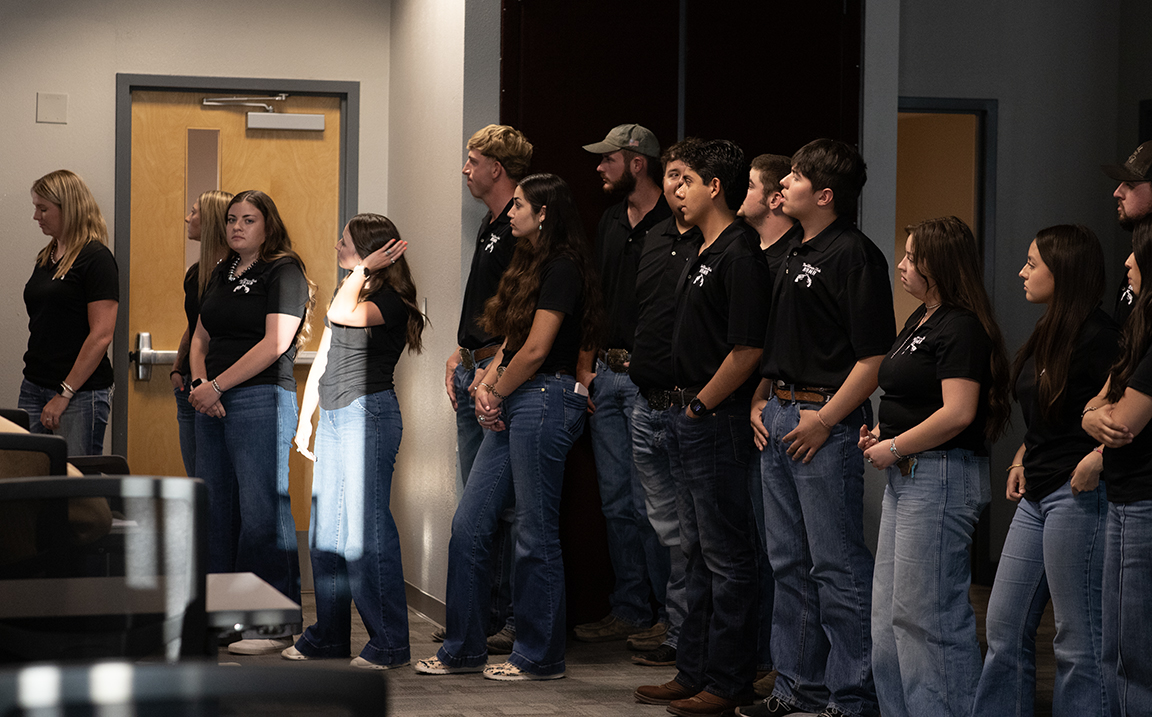
On Nov. 4, Latin American Programs hosted its Dia de Los Muertos event for the community members of New Mexico State University. Visitors enjoyed pan de muerto, hot chocolate, and several altars built by different clubs on campus.
Long before Europeans arrived, it was customary to celebrate the lives of passed loved ones in Mesoamerican culture and religion. The indigenous cultures held a belief that death was not the end of a person’s existence, but rather the beginning of a new chapter in their journey. Because of this view, it was common for families to leave ofrendas, or offerings, to the spirits of those gone in the form of food or decorations.
After the Spanish conquest of Mexico, these traditions blended with the Catholic observance of All Saints’ Day (Nov. 1), which celebrates the church’s saints, and All Souls’ Day (Nov. 2), which honors those faithful to the church who have died. Today, Dia de Los Muertos is celebrated by communities across Mexico and those of Mexican descent in the United States.
One of the student visitors, Natalia Sierra, said having the holiday celebrated on campus helps her reconnect with her cultural heritage.
“The idea of it is amazing,” Sierra said. “Obviously, it speaks to me because it is part of my culture. Although I am Chicana, I did not grow up on this side of what it means to be Chicana. But the older I get, the more I embrace these cultural aspects. Just the idea of it is very comforting, because knowing that there is this time that I can celebrate the ones who have passed, even when we know so little about death. So, having that idea that they can still be with me in some way is extremely comforting.”
Some members of LAP set up a table to give out activities to students at the event, such as coloring pages of La Catrina skulls. An undergraduate staff member, Roxana Estrada, said these activities, among others, kept students engaged.
“This activity is painting calaveritas, or the skulls of the dead,” Estrada said. “So, because we knew that people would come in and might have nothing to do, we thought of making them color something. Each club here today made an altar, and one of them is a community altar. What we’re doing is, students put a picture of a loved one on their phone, and we take a Polaroid of it. And when they print it out, they put it up there, just in case students do not have an actual photo with them.”
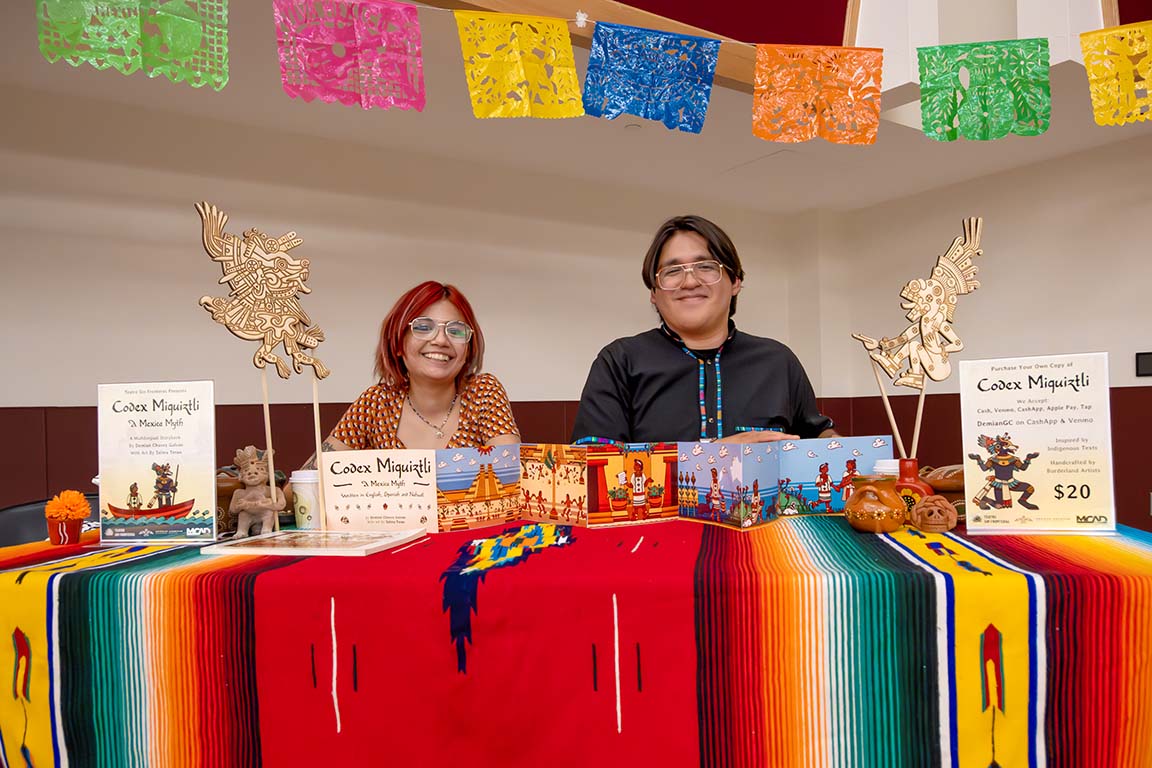
During the event, a group named Teatro Sin Fronteras presented one of their own books to visitors. Their work, “Codex Miquiztli,” is an illustrated recounting of the indigenous origins of Dia de Los Muertos. The book was put together as a screenfold (or in an “accordion-style”), similar to how many Mesoamerican codices formatted their literature. The book is written in English, Spanish, and Nahuatl, and sold for $20.
Codex Miquiztli’s author, Demian Chavez Galvan, discussed how drafting the book was not only culturally significant for themself, but also significant as a personal project.
“I mean, it’s my culture, but it’s also my own personal involvement with it,” Galvan said. “I’ve been thinking a lot about it. I’ve been thinking about it for about two years now. Last year, we did a play, and we adapted that play into this book. It has been about two years of research into the language, history, and culture; how people here for the last half thousand years have honored the dead and celebrated the dead and things like that. So, it is a lot of personal investment. I care about this a lot.”
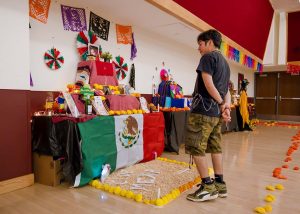
Galvan said the book’s focus on the indigenous roots of modern Mexican culture aims to encourage Latinos/as to honor the native influences in their traditions. Today, millions of Mexicans still speak their indigenous languages, including Nahuatl.
“A quote I really like is that ‘Mexico loves to venerate the ancient Indian and denigrate the modern Indian,’ right?” Galvan said. “There’s a massive, thriving indigenous population in Mexico that still practices these traditions that still hold over. We tend to think of them as a yesterday thing, but it helps us realize, ‘oh, it’s yesterday and today.’ The very last spread of the book compares Tenochtitlan to the city that was built on top of its ruins, 500 years later. It’s about that through line.”