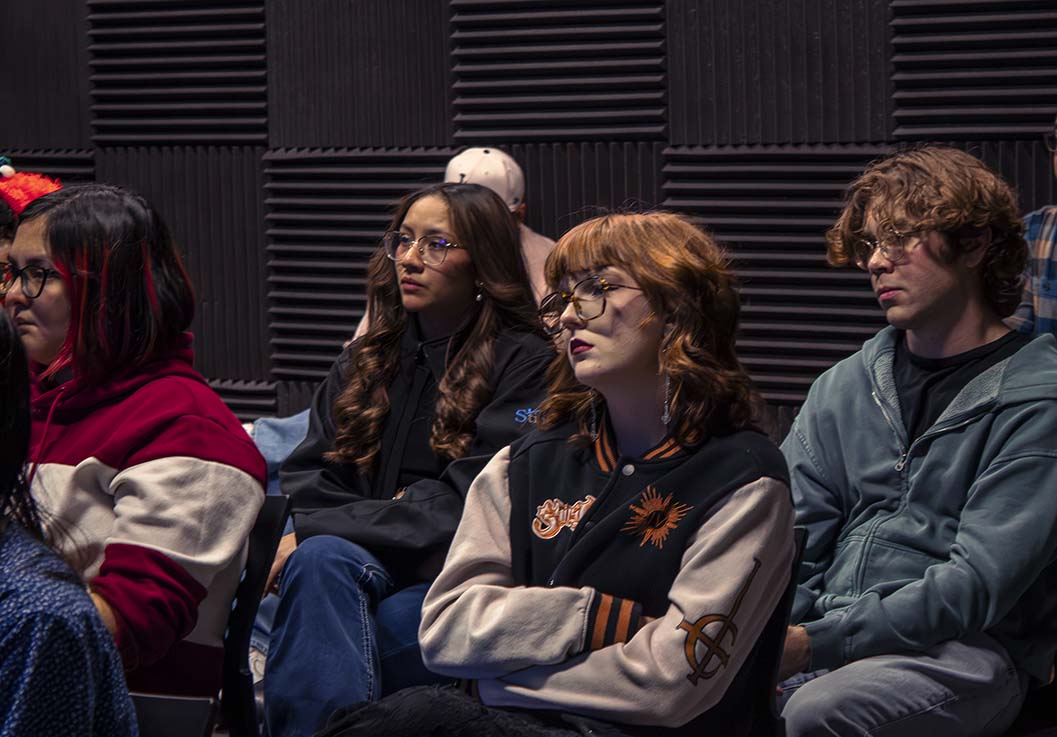
New Mexico State University’s Women in Animation (WIA) student collective invited animation students to speak with guest speaker Alex Untoria on April 23. During the virtual video call, an audience of Aggies asked Untoria questions about his upbringing, career, and how to thrive in the fields of design and animation.
After nearly two years of existence, NMSU WIA had its first-ever guest speaker event at Hilton Hall. This event and others come as the collective now aims to receive ASNMSU funding. Untoria worked for several television animation studios and independent creators. After graduating from Montclair State University in 2016, Untoria worked as a graphic designer, but aspired to branch into character design for animation. In 2019, Untoria moved to Los Angeles in order to be closer to the animation industry.
“I was going to conventions like the CTN Animation Expo and other events like it, which are all based in Los Angeles,” Untoria said. “I was showing my portfolio and stuff to recruiters and other artists that have been in the industry for 10 plus years. They critiqued my work a lot and said that I wouldn’t be able to work in animation. So, I was a little disheartened at first. But the good thing is that some of these artists actually gave me the great advice of taking classes online, which at the time I did not realize was a thing that you could do.”
While Untoria was taking animation classes virtually, the COVID-19 pandemic struck, and he was laid off as a graphic designer. However, Untoria now had more time to develop his skills as a character designer.
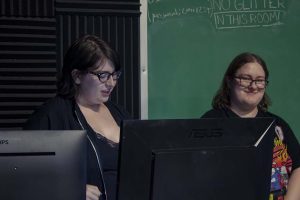
“I was able to spend a good amount of my time just working on my portfolio,” Untoria said. “And by the next year, I was applying to all these animation studios, and I was talking to recruiters. And, you know, going to like online events and things like that. And eventually something stuck, and I got my first animation job over at Bento Box, and I worked on a show called HouseBroken.”
After Untoria gave his background, the floor was opened for the audience to ask questions. Untoria was asked if he thought the rise of independent, or “indie,” animation studios would affect how animation is taught in colleges and universities.
“I think the principles will still be the same,” Untoria said. “Everything is still applicable, regardless of whether you’re drawing for an indie animation studio or if you’re drawing for a bigger studio, it doesn’t matter. You still need the same type of skills. I think what will change, though, is how your professors or instructors will go about telling you what jobs are available, or what avenues you can really take with your degree.”
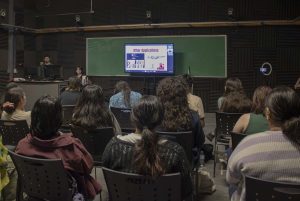
WIA Main Lead Rollins closed the Q&A with a question about how generative AI might affect the animation industry going forward. Untoria said although AI already had negative impacts in the industry, he is doubtful it could ever fully supplant human talent.
“There’s going to be fewer jobs,” Untoria said. “People are going to use it to inform or do the iteration process and then have actual artists go in and fix things because the technology isn’t good enough to create a whole film or movie that least looks good. That’s why you see a lot of indie animation studios and other independent creators rising right now. Because these bigger studios are dropping the ball. They are not fostering the artistic talent that they had, and those creators are moving on to do their own projects, and they are getting funding from people and fans that want to see that work put out into the world. Will it disrupt art, animation, and entertainment? Absolutely. Will it replace us? I don’t think so.”