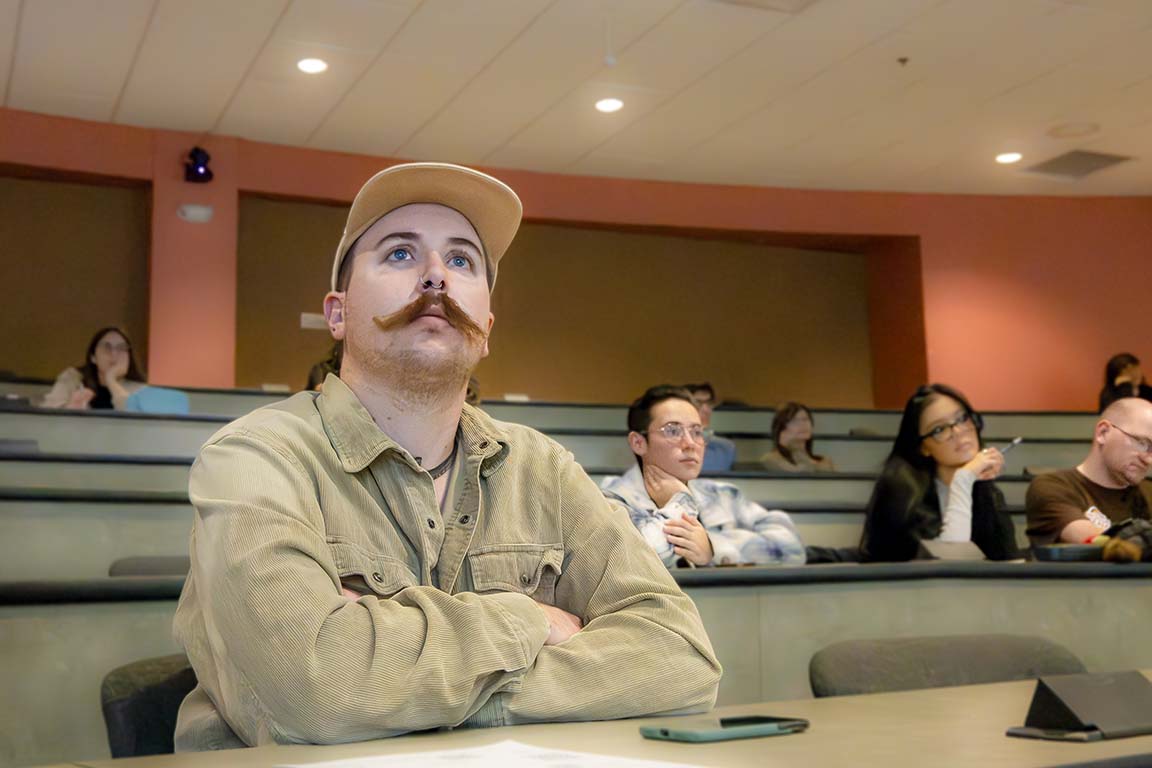
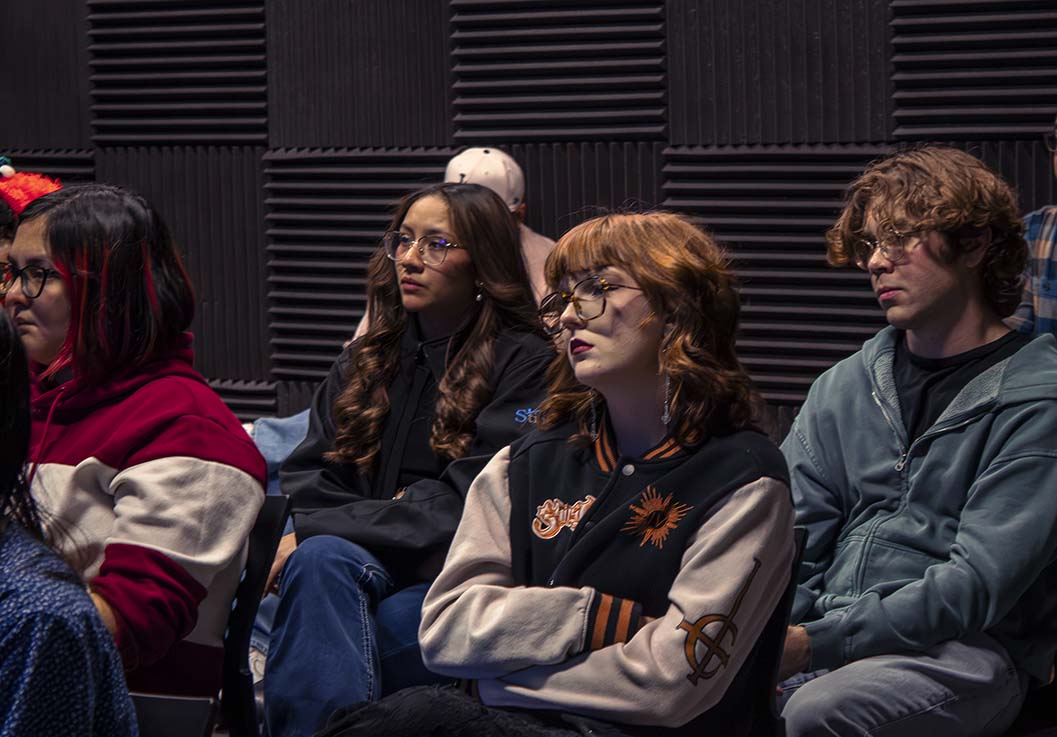
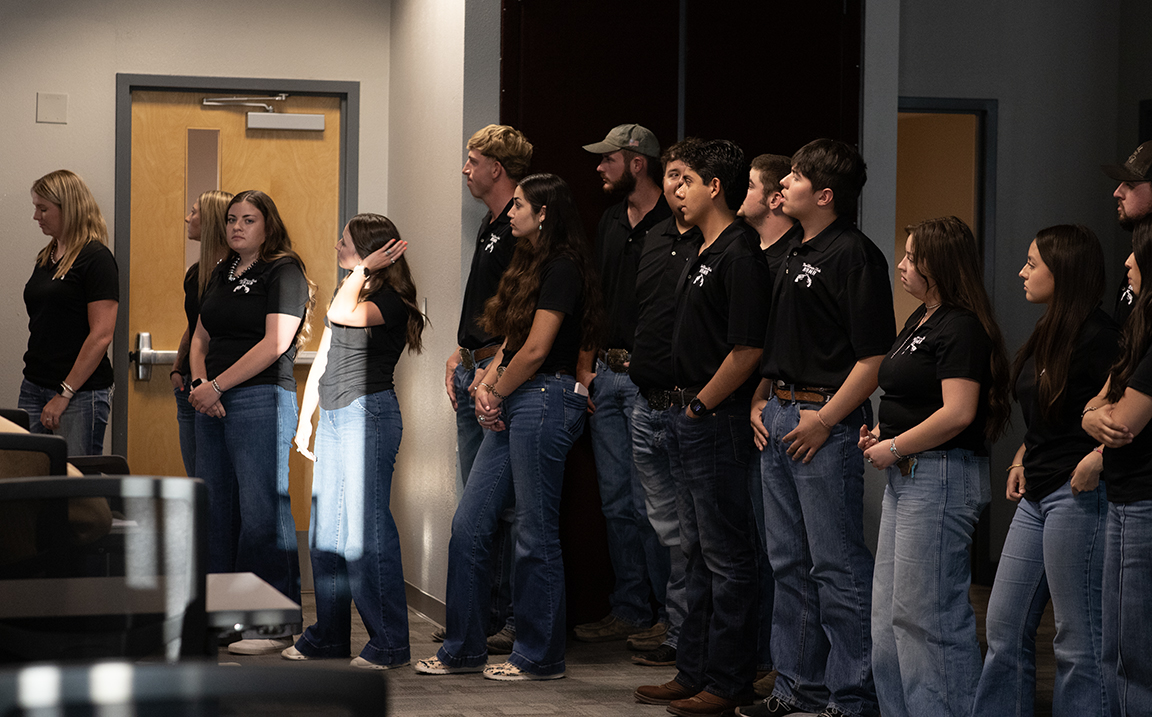
On Nov. 13, New Mexico State University’s diversity programs, along with Students for Justice in Palestine at NMSU, hosted An Eyewitness in Palestine: A Report Back from the West Bank. In the O’Donnell Hall auditorium, local activist Sue Small gave her testimonies of the land, people, and hardships of Palestine to listeners.
Previously, Small spoke to community members of the Las Cruces area at Israel Chávez’s law office on Sept. 25.
Small stayed in the West Bank during the summer of 2025. There, she connected with locals and advocated for their rights and land. Since the end of the Six-Day War in 1967, Israelis have been settling throughout the West Bank, resulting in violence between Israeli and Palestinian communities in the region. Currently, portions of the West Bank are under the military occupation of the Israeli Defense Forces, or IDF. Since Oct. 7, 2023, there have been over 7,154 attacks by Israeli settlers on Palestinians in the region.
Small shared the difficulties she initially faced when she planned to visit the West Bank, and how she eventually made her way in.
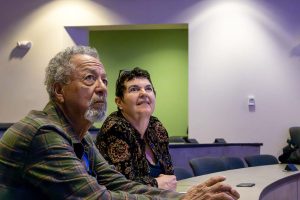
“I first tried to get to Palestine starting in 2023 and I had a everything booked for the summer of 2024,” Small said. “Then, everything got canceled because of Israel bombing Iran, and that fell through. So, then I re-cooped, sort of, and then I set a date of 2025, and I had a flight to Tel Aviv. But they canceled it two days before. So instead of having a psychic breakdown again, what I did was I switched to Royal Jordanian Airlines, flew into Jordan, and then waited there for four days to cross into Israel. So, you got to work to get there.”
On top of these difficulties, Small added that unlike herself, people of color might have a harder time trying to get through Israel and into the West Bank due to prejudice.
“Even though they still questioned me, I think they would have had a different response than if I were a different color. If I had different hair, a different skin tone, or a different last name,” Small said.
Another obstacle Small faced while in Palestine was the segregation of highways near Israeli-Palestinian territorial borders. Some of these roads can be closed unannounced and make travel between Israel and the West Bank more difficult.
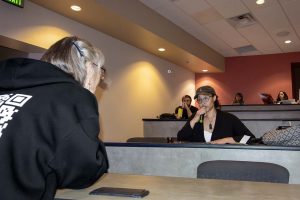
“In the West Bank, as well as in East Jerusalem, and of course in the other parts of the occupied territories, all the roads are organized to segregate the populations,” Small said. “If you are an Israeli, you are not allowed to go into some of the communities of the Palestinians. It has little to do with terrorism, and more to do with the apartheid system and maintaining that apartheid system. If you were driving on the right-hand side of the road, you would see there’s a gate. If you are driving there and the gate shuts, you’re stuck there. You cannot turn around, cannot back up, you cannot go anyplace. You could be there for a day; you could be there for hours.”
Throughout her time in the West Bank, Small interacted and worked with a Bedouin family, and she described her difficulty in trying to stay in contact with them through conflict. The Bedouins are a diverse group of Arabs and other ethnicities that practice a pastoral lifestyle.
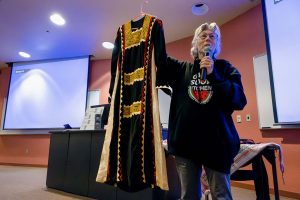
“I try to keep a connection with a Bedouin family in the Jordan Valley,” Small said. “But that has been so challenging because the infrastructure there is basically nonexistent. So, we keep connections through messenger and through Facebook, but it is still a frustrating connection. I guess it’s not even a memory, is it? It is continuous, it’s something that focuses me on the future, that is based on memory.”
One of the highlights of her speech was a pair of traditional Arab dresses that were sewn by a Palestinian woman and gifted to her as a thanks for her visit to the West Bank. Additionally, Small passed around photos of the local families she worked with over the summer. Some of them have since been brutalized by Israeli settlers.
Small cited her origins near Navajo territory and her observations of injustice against the Navajo nation and other Native American groups moved her to become an activist throughout her life.
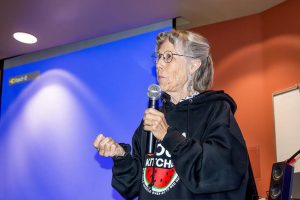
“I grew up in the Checkerboard Area between Grants and Gallup,” Small said. “And I saw how settlers, which I was one — of course, I was a kid — how settlers treated the indigenous. So, from a very young age, I have seen the result of racism, I have seen the despair of the indigenous that are oppressed. Not because of anything they did, but because of the oppressors’ racism. So, that was my inspiration. Because I do not want my country, through Israel, to do to another indigenous group what it did in America and is still doing in America. We must fight against the colonization. Colonization brings nothing but despair, and heartache, and dispossession to those that it ethnically cleanses.”
During her presentation, audience members asked Small questions about her experience in the West Bank. One person asked what is motivating her to continue visiting Palestine, to which Small responded with an instance of when she tried speaking Arabic with a Palestinian girl.
“That young girl’s smile; that definitely keeps me on my Duolingo lessons, so that I continue my Arabic. So, the next time I go back, she’ll have a little different smile when I speak to her in her language.”
Despite a ceasefire declaration in Oct. 2025, the IDF has continued to carry out strikes in Gaza, resulting in more Palestinian deaths. On Nov. 17, the UN Security Council voted in favor of the US-backed plan for Gaza, which includes the presence of international forces in the strip.